Since the surprise attacks on the Iranian regime and its religious and military leadership earlier this year, commentators and netizens have repeatedly argued that, regardless of how many blows the Islamic Revolutionary Guard Corps suffers or how many additional sanctions the United States imposes, the Islamic Republic of Iran is not going anywhere. North Korea has survived decades of sanctions, they point out, and Russia has endured extensive sanctions more recently. Military strikes against facilities and senior officials, meanwhile, are insufficient to bring down a regime that retains the means to suppress domestic opposition.
Applying a single model of authoritarian durability to Iran, North Korea, and Russia risks obscuring the particular historical, social, and political circumstances that shape each regime’s resilience.
There is truth to these arguments. But they also overlook an important point: authoritarian regimes are not interchangeable. Applying a single model of authoritarian durability to Iran, North Korea, and Russia risks obscuring the particular historical, social, and political circumstances that shape each regime’s resilience.
I should start with a disclaimer. I am a historian of modern Eurasia, not a specialist in contemporary Iran or the Middle East. My purpose here is therefore not to predict the future of the Islamic Republic, nor to argue for or against military action. Instead, I want to question a widespread assumption in the current debate: that Iran’s ability to withstand external pressure can be inferred from the experience of other authoritarian states. Iran’s history presents a considerably more complicated picture, one characterized by repeated struggles over sovereignty, foreign influence, political legitimacy, and the relationship between religion and the state.
Iran’s history is often presented through its remarkable continuities: an ancient civilization, a rich Persian literary and intellectual tradition, and a strong sense of national identity. All of this is true—and, as a self-described Persophile, I have no desire to minimize it. But Iran’s history also contains a striking record of political, religious, cultural, and ideological transformations.
Iranian civilization developed through changes within the Iranian world and exchanges with neighboring societies. Zoroastrianism arose within that wider Iranian world, although scholars continue to debate its precise origins. Following the Arab conquest, Islam and Arabic culture profoundly influenced and were influenced by Persian politics and thought. Persian came to be written in an Arabic-derived script and absorbed many Arabic words. Shiʿism grew out of disputes over leadership of the early Muslim community, and Iranian communities and rulers helped shape its development. The Buyids supported Shiʿi traditions centuries before the Safavids made Twelver Shiʿism Iran’s state religion. These histories show how Iranians helped shape the religious and cultural traditions that became part of their identity.
How might these patterns of foreign ideological influence be relevant today, when Iran is controlled by a theocratic Shi’ite elite? Beneath the surface, survey research points to a more varied religious landscape within Iran. Religious views also vary among the millions of Iranians in the diaspora. While some have reportedly embraced Christianity, mostly underground, other ideological currents are common among Iranians both inside and outside the country, including Western liberalism, although conservatism, nationalism, secularism, and monarchism also have their adherents. These ideas and aspirations are not mutually exclusive.
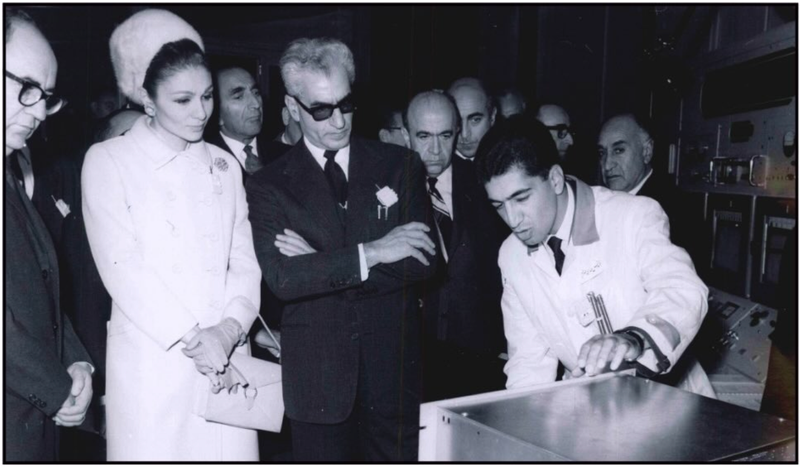
Women’s liberation and equality, as well as other civil freedoms, including freedom from religious dictates, remain important to many Iranians, particularly those who remember life under the Shah. Yes, the last Shah of Iran was an authoritarian leader. Yet under his rule, Iran also experienced considerable changes in women’s rights, education, culture, and social life, alongside increasing Westernization. Under the Shah’s White Revolution, for example, women’s suffrage was introduced, and women’s education and participation in public life were encouraged, even while the regime continued to restrict political opposition and freedom of expression.
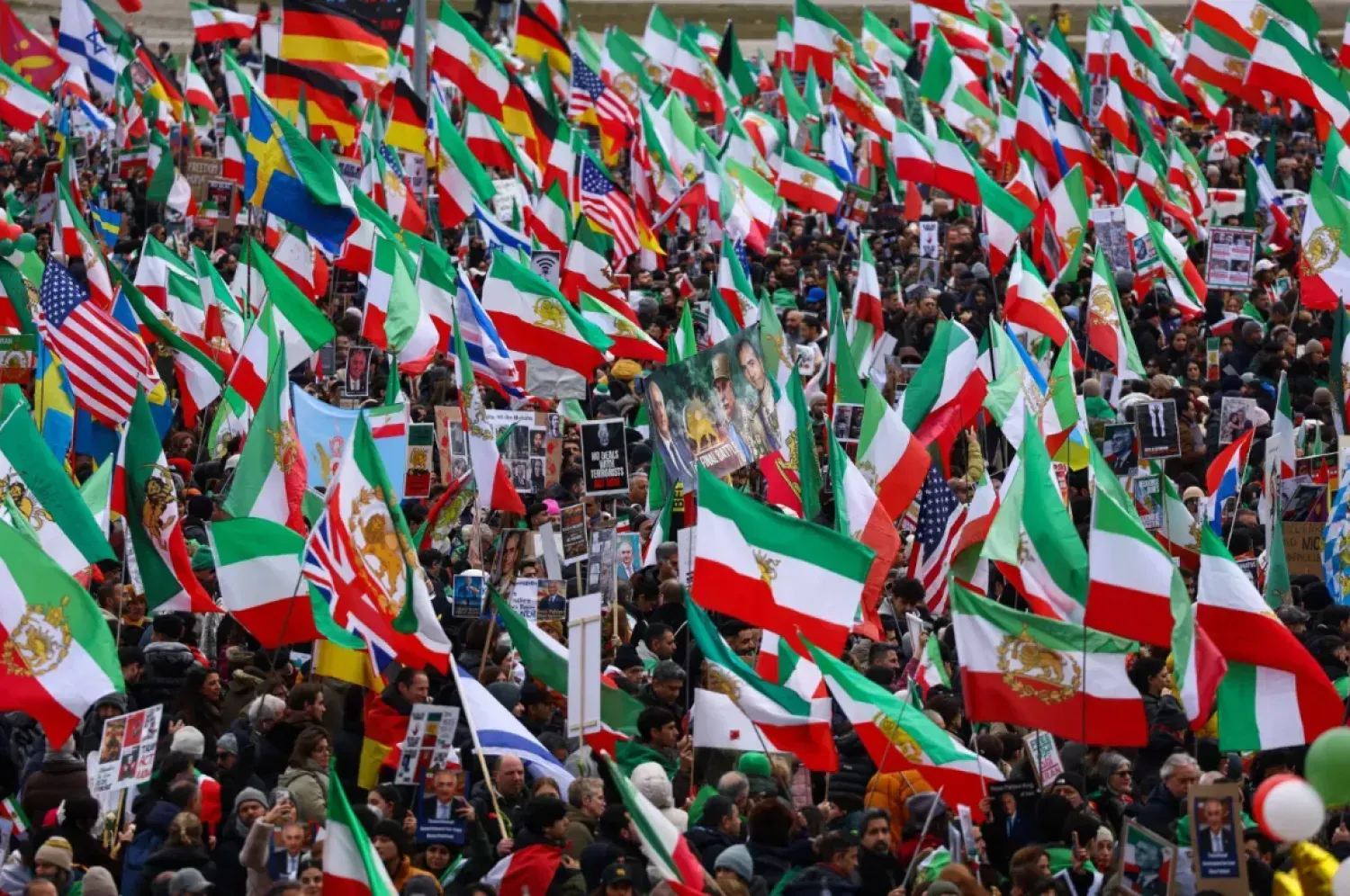
Many Iranians today still remember and cherish aspects of this era. And if we look at the slogans and chants of young and old Iranian protesters on the streets of Iran’s cities, we often hear resistance to religious dictates and appeals for greater freedoms and rights. Have we seen anything quite like that in other authoritarian regimes?
For thousands of years, Iran has been susceptible to external influences that extended beyond its cultural and religious life. Situated between the Arabian Peninsula to the southwest, the Caucasus to the northwest, Russia to the north, and Central Asia to the northeast, Iran’s pre-modern geopolitical environment could hardly have been less favorable when mounted armies could sweep across its territories. And indeed, several of its ruling dynasties were of non-Persian origin, including the Ilkhanids (Mongol; 1256–1335), the Timurids (Turco-Mongol; 1370–1507), and the Qajars (Turkic; 1789–1925), among others.
Iran’s problem of sovereignty over its borderlands may seem to the reader as a pre-modern concern. Yet it is worth recalling that in the twentieth century, Iran temporarily lost effective control over parts of its northern territories amid Soviet interventions: the Soviet-backed Republic of Gilan in 1920–21, the Azerbaijan People’s Government in 1945–46, and the Republic of Kurdistan (Mahabad) in 1946. Even today, Iran faces serious security and governance challenges in parts of the country, particularly in Baluchistan. These are among the structural challenges that have shaped Iran’s geopolitical environment. We can also add the problem of resources, particularly water, with which the country has struggled for decades.
What about other indications for structural weaknesses in Iran’s more recent history? Over the past century, Iran's history shows repeated major political transitions—whether the collapse of a dynasty, the forced departure of a monarch, or the overthrow of a government. In 1925, the Qajar dynasty collapsed and the Pahlavi dynasty replaced it. In 1979, as is well known, Pahlavi rule ended with the Iranian Revolution and the establishment of the Islamic Republic led by Khomeini. But between these two episodes, Iran experienced two other major disruptions to its political authority.
First, during World War II, Iran was occupied by the Soviet Union and Britain. The occupation undermined Reza Shah’s rule and eventually forced him to abdicate in favor of his son, Mohammad Reza Pahlavi. Later, in 1953, Prime Minister Mohammad Mosaddeq was removed from office following a political confrontation with the Shah. The overthrow of his government involved CIA and British intervention alongside Iranian actors.
Rather than reducing these political changes to mere results of foreign intervention, it is equally important to note the socio-political divisions within Iran that have played, and continue to play, a major role. Today, Iran remains divided among supporters of Shi’ite theocratic rule, monarchists, republicans, secularists, and other political currents. These groups differ profoundly over the country’s political system and its relationship with the West. Yet many of them share an aspiration to revitalize Iran’s regional and international standing.
True, the Islamic Republic of Iran fundamentally differs from the political orders that preceded it, including the Pahlavi monarchy and earlier dynasties. As a revolutionary regime founded on a distinct religious and ideological project, it has developed institutions and strategies specifically designed to preserve its rule against both domestic and external challenges. Since coming to power in 1979, the regime has combined coercion and repression with more selective forms of material accommodation. It has sought to mitigate economic grievances while building an extensive security apparatus, most notably the IRGC, which can suppress domestic opposition. It has also mobilized state ideology and religion to reinforce political conformity and legitimize its authority. The regime’s response to recent protests, particularly the deadly crackdown in January 2026, illustrates the central role that coercion continues to play in its survival. Externally, its willingness to threaten or restrict passage through the Strait of Hormuz shows how it can use its strategic position to pressure the West and other Persian Gulf states. Iranian leaders have also drawn lessons from the collapse of the Pahlavi dynasty, whose failure to contain popular discontent contributed to its downfall. Yet perhaps the most consequential test of the new regime came almost immediately after its establishment when Iraq invaded Iran in 1980. Not only did the new Iranian regime survive this existential challenge, but it also used the war to consolidate its authority, expand its security institutions, and strengthen the position of the IRGC.
Despite these important differences, the Islamic Republic inherited some of the structural challenges that had confronted earlier Iranian governments, including exposure to external pressure and longstanding limits on water availability.
Another less tangible but equally important variable is the evolution of Iranian identity itself. The Pahlavi period was marked by Westernization, social mobility for women, and expanding educational and social opportunities. Rather than being mere top-down transformations, these trends also reflected genuine desires from the Iranian population for change. The 1979 Revolution did not simply reverse these developments, nor did it halt the social and cultural changes that had helped produce them. As noted above, contemporary Iran remains a diverse society, and conceptions of national identity continue to evolve as religious identification has become more contested. At the same time, foreign culture and ideas continue to circulate despite state efforts to restrict them. This distinguishes Iran from North Korea, where the state exercises much tighter control over access to outside information and cultural influences. The challenge for the Islamic Republic is therefore geopolitical and economic, as well as ideological and social. As the population's values, expectations, and identities change, a revolutionary regime whose legitimacy rests on a particular conception of religious and political order may find it increasingly difficult to respond to these shifts.
Rather than trying to persuade the reader to support a military strike against the Iranian regime, this piece asks readers to reconsider the vulnerabilities that distinguish the Islamic Republic from other authoritarian regimes.
In some respects, the Islamic Republic may be more usefully compared to the Soviet Union than to contemporary Russia. Like the Soviet regime, it emerged from a revolution driven by an ideological commitment, and it relies on an extensive system of institutions and coercion to preserve its political order. The Soviet Union remained a superpower until its demise, and its disintegration in 1991 surprised many political leaders, experts, and observers. Its collapse is a reminder that even seemingly durable authoritarian systems can prove vulnerable to pressures that are difficult to anticipate.
Comparisons between Iran and other authoritarian regimes must therefore be approached with caution. The durability of authoritarian regimes cannot be inferred simply from the experience of other authoritarian states. Iran possesses a particular combination of socio-political instability, contested legitimacy, important social movements, and a long history of foreign interventions that distinguish it from North Korea or Russia. None of these factors makes regime change inevitable.