President Masoud Pezeshkian and parliament speaker Mohammad Bagher Ghalibaf appear to be moving closer on negotiations. The pendulum in Iranian politics continues to swing between the battlefield and the negotiating table. Pezeshkian has publicly called for a return to the ceasefire understanding before the U.S. midterm elections.[1] Ghalibaf, a former Revolutionary Guards commander, frames the issue differently. He argues for fighting and talking at the same time, while separately acknowledging the heavy toll of currency swings, inflation, and unemployment on ordinary lives.[2][3]
This suggests limited convergence on the value of diplomacy, not necessarily agreement on its timing, terms, or relationship to military pressure. Hardline resistance to concessions remains firmly part of the political landscape.[4] Yet the familiar binaries of war or negotiation, resistance or a deal, have rarely been as clean as they sound in Tehran.
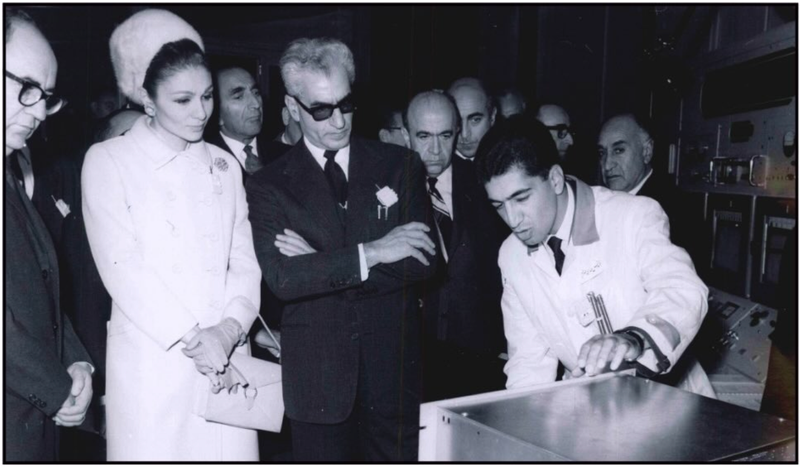
A decade ago, Mohammad Javad Zarif negotiated sanctions relief while Qassem Soleimani expanded Iran’s regional reach. Their approaches could compete, but they could also reinforce each other by increasing the Islamic Republic’s overall leverage. Ali Khamenei ultimately defined the political boundaries within which both operated.
Could the apparent alignment between Pezeshkian and Ghalibaf be another version of that same division of labor? With Ali Khamenei gone and Mojtaba’s leadership largely invisible to the public,[5] those boundaries are harder to read. Neither a carefully coordinated arrangement nor a decisive break with the old pattern can be taken for granted.
Uncertainty inside the establishment is only half the problem. Every faction must also calculate the reactions of a society whose responses it cannot reliably predict. Repression can silence visible dissent while making the real distribution of grievances, fears, and readiness to act even harder to see. Quiet streets do not reliably measure lasting stability. Instead, they may conceal a much more fragile political equilibrium.
January’s protests made this difficulty plain. What began in Tehran’s bazaars amid a collapsing rial and soaring prices quickly spread beyond merchants and their economic complaints. Reuters reported that the crackdown killed thousands, citing rights groups.[6] Demonstrations continued in fits and starts, including on university campuses, in the weeks before the U.S. and Israeli strikes began on February 28.[7][8]
After Ali Khamenei’s death, flag-waving supporters answered the authorities’ call and filled the streets.[8][10] Those gatherings made visible a constituency willing to answer the authorities’ call. Nevertheless, they could not reveal the views of those who stayed home, nor could they show how those views might shift once the costs of war reached ordinary households.
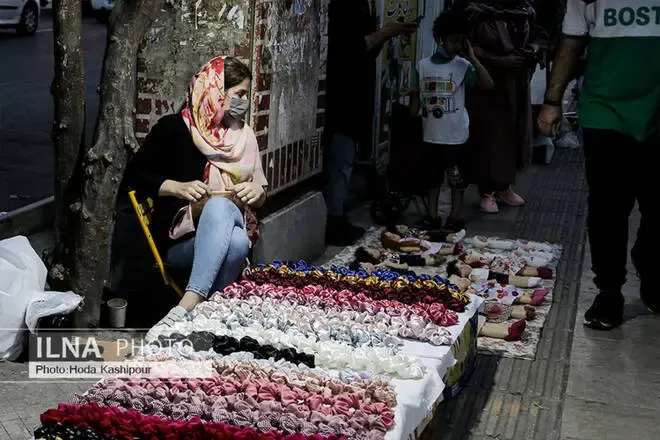
By September, the naval blockade and pressure on oil exports were adding new weight to those costs.[9] The effects were landing on families already struggling to keep food on the table. The grievances that fueled January’s unrest had not disappeared. The pressures surrounding them had only grown heavier.
For many Iranians, these pressures translate into a simpler daily calculation: getting through another month, sometimes just another day, without cutting something else from the family budget. Their choices cannot be reduced to the elite debate over resistance versus negotiation. Wanting relief does not automatically mean trusting either side to deliver it.
“Public endurance” is not a single reservoir that empties at the same rate for everyone. Households face different pressures and command different resources. People who share the same grievances may still disagree about what to do, fear the consequences of acting, or see no realistic way to act together. Hardship does not convert automatically into a nationwide uprising.
January therefore offers no reliable guide to how much further pressure society might absorb. The authorities demonstrated how far they were prepared to go to crush dissent. They did not reveal the conditions under which those grievances might reappear in another form. The absence of another nationwide revolt since the war began does not settle the question either. Surface calm should not be mistaken for resolved discontent.
Suppression can produce immediate quiet without providing trustworthy information about what that quiet actually means.
For decision-makers, this creates a problem that security forces alone cannot solve. A state may succeed in preventing protest today while remaining uncertain about how another economic shock, a fresh military strike, or prolonged uncertainty would reshape behavior tomorrow. Suppression can produce immediate quiet without providing trustworthy information about what that quiet actually means. The result may be order on the surface alongside considerable uncertainty underneath.
Those who favor continued confrontation may believe they can still endure further pressure and preserve military leverage. Those who prefer a settlement can point to the rising economic bill. Neither side can confidently claim to know what people want or how they might respond, let alone control that response. The danger, therefore, is not simply the possibility of renewed protest. It is the risk of making consequential decisions on the assumption that visible silence has removed a major source of political uncertainty.
Economic hardship may tilt the balance toward diplomacy, even as Ghalibaf continues to present resistance as a source of strength. Whether that shift produces a workable settlement remains an open question. Explaining the bill is not the same as winning the consent of those who must pay it.
Tehran’s calculations must therefore reach beyond missiles, oil revenue, and the capacity of its security apparatus. The question is not where a precisely measurable breaking point lies. It is how to decide when the consequences of applying even more pressure cannot be known in advance, and when apparent stability may be more unstable than the streets suggest. Society keeps its own time. Perhaps an hourglass: the sand keeps falling, even though no one can tell from the quiet streets how much remains.